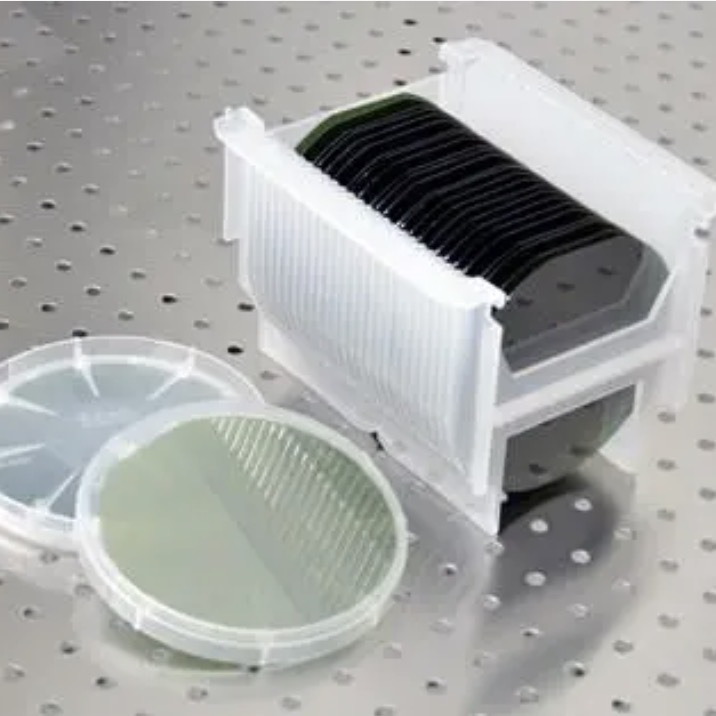
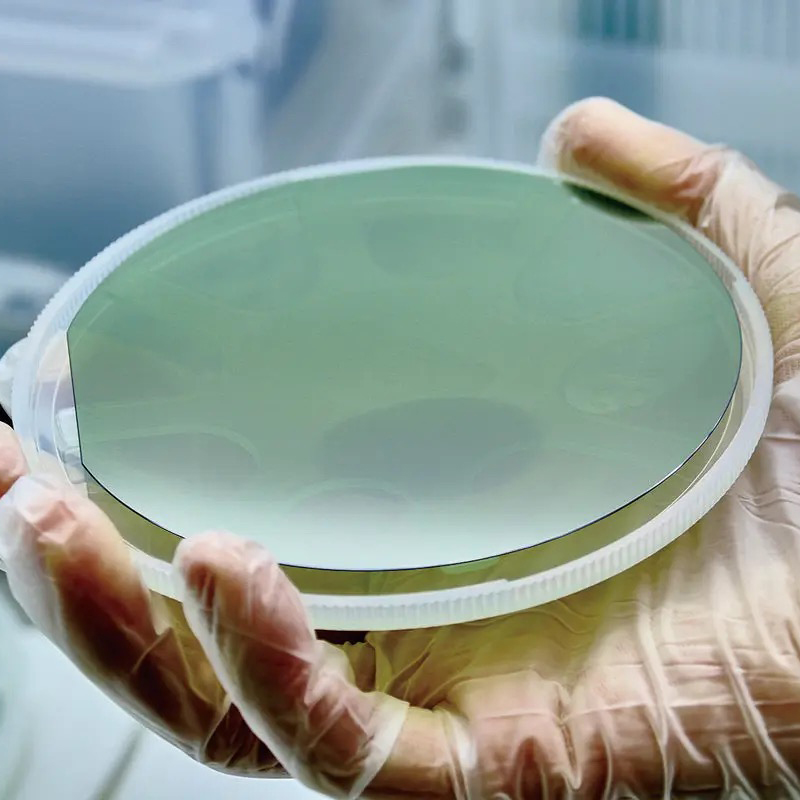
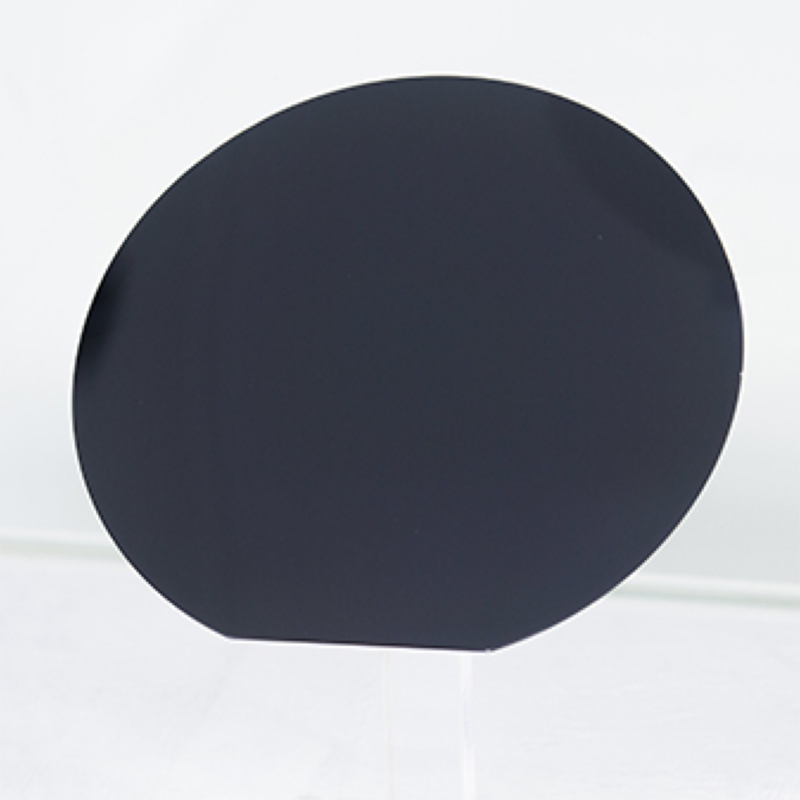
High-Performance Heterogeneous Substrate for RF Acoustic Devices (LNOSiC)


Detailed Diagram

Product Overview

The RF front-end module is a critical component of modern mobile communication systems, and RF filters are among its most essential building blocks. The performance of RF filters directly determines spectrum utilization efficiency, signal integrity, power consumption, and overall system reliability. With the introduction of 5G NR frequency bands and the continuous evolution toward future wireless standards, RF filters are required to operate at higher frequencies, wider bandwidths, higher power levels, and improved thermal stability.
At present, high-end RF acoustic filters remain highly dependent on imported technologies, while domestic development in materials, device architectures, and manufacturing processes is relatively limited. Achieving high-performance, scalable, and cost-effective RF filter solutions is therefore of great strategic importance.
Industry Background and Technical Challenges
Surface acoustic wave (SAW) and bulk acoustic wave (BAW) filters are the two dominant technologies in mobile RF front-end applications due to their excellent frequency selectivity, high quality factor (Q), and low insertion loss. Among them, SAW filters offer clear advantages in cost, process maturity, and large-scale manufacturability, making them the mainstream solution in the domestic RF filter industry.
However, conventional SAW filters face intrinsic limitations when applied to advanced 4G and 5G communication systems, including:
-
Limited center frequency, restricting coverage of mid- and high-band 5G NR spectrum
-
Insufficient Q factor, constraining bandwidth and system performance
-
Pronounced temperature drift
-
Limited power handling capability
Overcoming these constraints while preserving the structural and process advantages of SAW technology is a key technical challenge for next-generation RF acoustic devices.
Design Philosophy and Technical Approach
From a physical perspective:
-
Higher operating frequency requires acoustic modes with higher phase velocity under identical wavelength conditions
-
Wider bandwidth demands larger electromechanical coupling coefficients
-
Higher power handling depends on substrates with excellent thermal conductivity, mechanical strength, and low acoustic loss
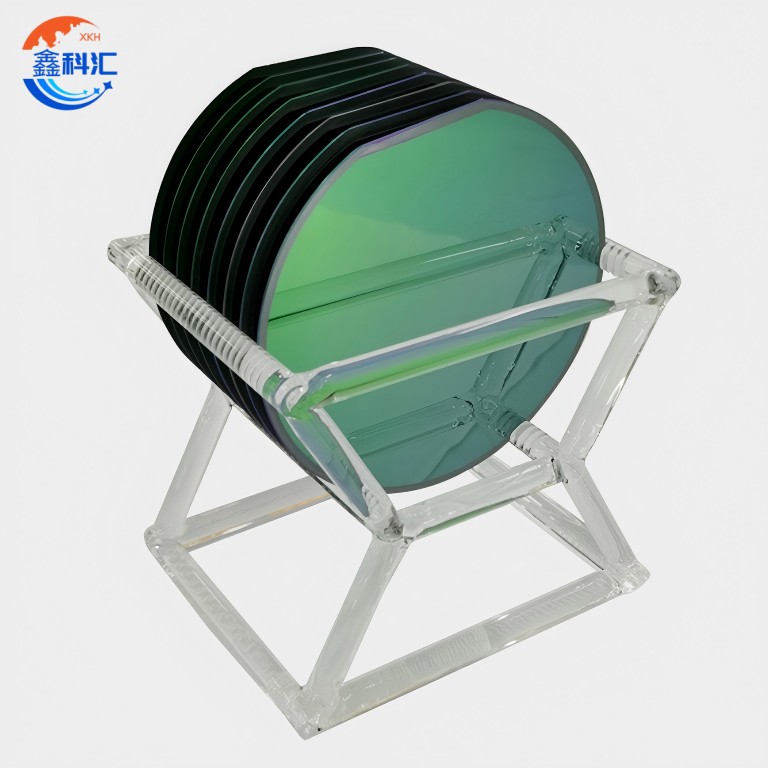
Based on this understanding, our engineering team has developed a novel heterogeneous integration approach by combining single-crystal lithium niobate (LiNbO₃, LN) piezoelectric thin films with high-acoustic-velocity, high-thermal-conductivity supporting substrates, such as silicon carbide (SiC). This integrated structure is referred to as LNOSiC.
Core Technology: LNOSiC Heterogeneous Substrate
The LNOSiC platform delivers synergistic performance advantages through material and structural co-design:
High Electromechanical Coupling
The single-crystal LN thin film exhibits excellent piezoelectric properties, enabling efficient excitation of surface acoustic waves (SAW) and Lamb waves with large electromechanical coupling coefficients, thereby supporting wideband RF filter designs.
High Frequency and High-Q Performance
The high acoustic velocity of the supporting substrate enables higher operating frequencies while effectively suppressing acoustic energy leakage, resulting in improved quality factors.
Superior Thermal Management
Supporting substrates such as SiC provide exceptional thermal conductivity, significantly enhancing power handling capability and long-term operational stability under high RF power conditions.
Process Compatibility and Scalability
The heterogeneous substrate is fully compatible with existing SAW fabrication processes, facilitating smooth technology transfer, scalable manufacturing, and cost-effective production.

Device Compatibility and System-Level Advantages
The LNOSiC heterogeneous substrate supports multiple RF acoustic device architectures on a single material platform, including:
-
Conventional SAW filters
-
Temperature-compensated SAW (TC-SAW) devices
-
Insulator-enhanced high-performance SAW (IHP-SAW) devices
-
High-frequency Lamb wave acoustic resonators
In principle, a single LNOSiC wafer can support multi-band RF filter arrays covering 3G, 4G, and 5G applications, offering a true “All-in-One” RF acoustic substrate solution. This approach reduces system complexity while enabling higher performance and greater integration density.
Strategic Value and Industrial Impact
By preserving the cost and process advantages of SAW technology while achieving a substantial leap in performance, the LNOSiC heterogeneous substrate provides a practical, manufacturable, and scalable pathway toward high-end RF acoustic devices.
This solution not only supports large-scale deployment in 4G and 5G communication systems but also establishes a solid materials and technology foundation for future high-frequency and high-power RF acoustic devices. It represents a critical step toward domestic substitution of high-end RF filters and long-term technological self-reliance.

FAQ of LNOSIC
Q1: How does LNOSiC differ from conventional SAW substrates?
A: Conventional SAW devices are typically fabricated on bulk piezoelectric substrates, which limits frequency, Q factor, and power handling. LNOSiC integrates a single-crystal LN thin film with a high-velocity, high-thermal-conductivity substrate, enabling higher frequency operation, wider bandwidth, and significantly improved power capability while retaining SAW process compatibility.
Q2: How does LNOSiC compare with BAW/FBAR technologies?
A: BAW filters excel at very high frequencies but require complex fabrication processes and incur higher costs. LNOSiC offers a complementary solution by extending SAW technology into higher frequency bands with lower cost, better process maturity, and greater flexibility for multi-band integration.
Q3: Is LNOSiC suitable for 5G NR applications?
A: Yes. The high acoustic velocity, large electromechanical coupling, and superior thermal management of LNOSiC make it well suited for mid- and high-band 5G NR filters, including applications requiring wide bandwidth and high power handling.
About Us
XKH specializes in high-tech development, production, and sales of special optical glass and new crystal materials. Our products serve optical electronics, consumer electronics, and the military. We offer Sapphire optical components, mobile phone lens covers, Ceramics, LT, Silicon Carbide SIC, Quartz, and semiconductor crystal wafers. With skilled expertise and cutting-edge equipment, we excel in non-standard product processing, aiming to be a leading optoelectronic materials high-tech enterprise.