
Silicon carbide (SiC) has emerged as a crucial material in modern electronics, particularly for applications involving high power, high-frequency, and high-temperature environments. Its superior properties—such as wide bandgap, high thermal conductivity, and high breakdown voltage—make SiC an ideal choice for advanced devices in power electronics, optoelectronics, and radio frequency (RF) applications. Among the different types of SiC wafers, semi-insulating and n-type wafers are commonly used in RF systems. Understanding the differences between these materials is essential for optimizing the performance of SiC-based devices.
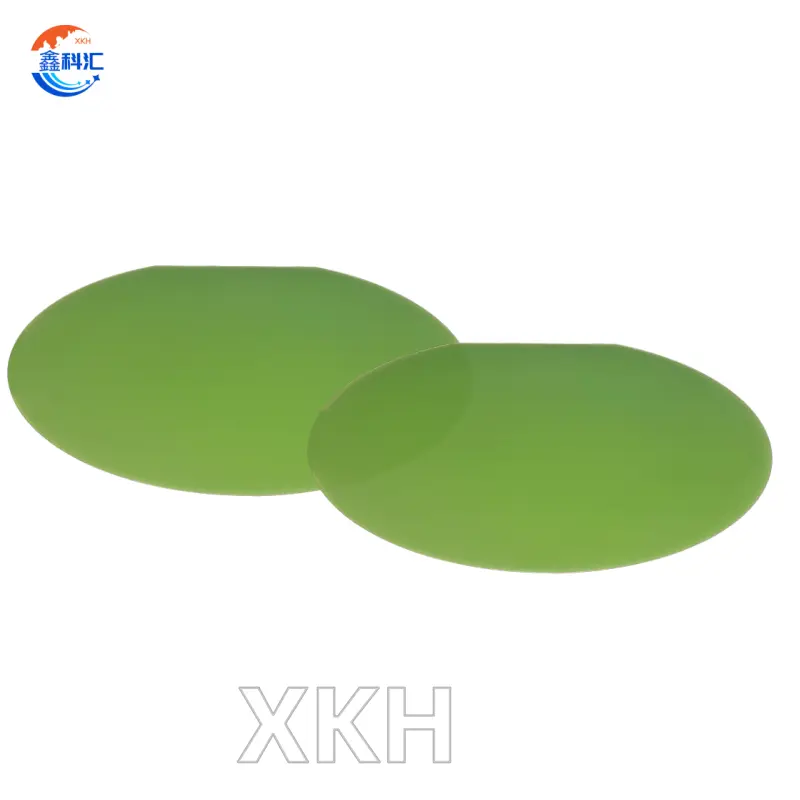
1. What Are Semi-Insulating and N-Type SiC Wafers?
Semi-Insulating SiC Wafers
Semi-insulating SiC wafers are a specific type of SiC that has been intentionally doped with certain impurities to prevent free carriers from flowing through the material. This results in a very high resistivity, meaning that the wafer does not conduct electricity easily. Semi-insulating SiC wafers are particularly important in RF applications because they offer excellent isolation between the active device regions and the rest of the system. This property reduces the risk of parasitic currents, thereby improving the device’s stability and performance.
N-Type SiC Wafers
In contrast, n-type SiC wafers are doped with elements (typically nitrogen or phosphorus) that donate free electrons to the material, allowing it to conduct electricity. These wafers exhibit lower resistivity compared to semi-insulating SiC wafers. N-type SiC is commonly used in the fabrication of active devices like field-effect transistors (FETs) because it supports the formation of a conductive channel necessary for current flow. N-type wafers provide a controlled level of conductivity, making them ideal for power and switching applications in RF circuits.
2. Properties of SiC Wafers for RF Applications
2.1. Material Characteristics
-
Wide Bandgap: Both semi-insulating and n-type SiC wafers possess a wide bandgap (around 3.26 eV for SiC), which enables them to operate at higher frequencies, higher voltages, and temperatures compared to silicon-based devices. This property is particularly beneficial for RF applications that require high-power handling and thermal stability.
-
Thermal Conductivity: SiC’s high thermal conductivity (~3.7 W/cm·K) is another key advantage in RF applications. It allows for efficient heat dissipation, reducing the thermal stress on components and improving overall reliability and performance in high-power RF environments.
2.2. Resistivity and Conductivity
-
Semi-Insulating Wafers: With resistivity typically in the range of 10^6 to 10^9 ohm·cm, semi-insulating SiC wafers are crucial for isolating different parts of RF systems. Their non-conductive nature ensures that there is minimal current leakage, preventing unwanted interference and signal loss in the circuit.
-
N-Type Wafers: N-type SiC wafers, on the other hand, have resistivity values ranging from 10^-3 to 10^4 ohm·cm, depending on the doping levels. These wafers are essential for RF devices that require controlled conductivity, such as amplifiers and switches, where the flow of current is necessary for signal processing.
3. Applications in RF Systems
3.1. Power Amplifiers
SiC-based power amplifiers are a cornerstone of modern RF systems, particularly in telecommunications, radar, and satellite communications. For power amplifier applications, the choice of wafer type—semi-insulating or n-type—determines the efficiency, linearity, and noise performance.
-
Semi-Insulating SiC: Semi-insulating SiC wafers are often used in the substrate for the amplifier’s base structure. Their high resistivity ensures that unwanted currents and interference are minimized, leading to cleaner signal transmission and higher overall efficiency.
-
N-Type SiC: N-type SiC wafers are used in the active region of power amplifiers. Their conductivity allows for the creation of a controlled channel through which electrons flow, enabling the amplification of RF signals. The combination of n-type material for active devices and semi-insulating material for substrates is common in high-power RF applications.
3.2. High-Frequency Switching Devices
SiC wafers are also used in high-frequency switching devices, such as SiC FETs and diodes, which are crucial for RF power amplifiers and transmitters. The low on-resistance and high breakdown voltage of n-type SiC wafers make them particularly suitable for high-efficiency switching applications.
3.3. Microwave and Millimeter-Wave Devices
SiC-based microwave and millimeter-wave devices, including oscillators and mixers, benefit from the material’s ability to handle high power at elevated frequencies. The combination of high thermal conductivity, low parasitic capacitance, and wide bandgap makes SiC ideal for devices operating in the GHz and even THz ranges.
4. Advantages and Limitations
4.1. Advantages of Semi-Insulating SiC Wafers
-
Minimal Parasitic Currents: The high resistivity of semi-insulating SiC wafers helps to isolate the device regions, reducing the risk of parasitic currents that could degrade the performance of RF systems.
-
Improved Signal Integrity: Semi-insulating SiC wafers ensure high signal integrity by preventing unwanted electrical paths, making them ideal for high-frequency RF applications.
4.2. Advantages of N-Type SiC Wafers
-
Controlled Conductivity: N-type SiC wafers provide a well-defined and adjustable level of conductivity, making them suitable for active components such as transistors and diodes.
-
High Power Handling: N-type SiC wafers excel in power switching applications, withstanding higher voltages and currents compared to traditional semiconductor materials like silicon.
4.3. Limitations
-
Processing Complexity: SiC wafer processing, particularly for semi-insulating types, can be more complex and expensive than silicon, which may limit their use in cost-sensitive applications.
-
Material Defects: While SiC is known for its excellent material properties, defects in the wafer structure—such as dislocations or contamination during manufacturing—can affect performance, especially in high-frequency and high-power applications.
5. Future Trends in SiC for RF Applications
The demand for SiC in RF applications is expected to increase as industries continue to push the limits of power, frequency, and temperature in devices. With advancements in wafer processing technologies and improved doping techniques, both semi-insulating and n-type SiC wafers will play an increasingly critical role in next-generation RF systems.
-
Integrated Devices: Research is ongoing into integrating both semi-insulating and n-type SiC materials into a single device structure. This would combine the benefits of high conductivity for active components with the isolation properties of semi-insulating materials, potentially leading to more compact and efficient RF circuits.
-
Higher Frequency RF Applications: As RF systems evolve toward even higher frequencies, the need for materials with greater power handling and thermal stability will grow. SiC’s wide bandgap and excellent thermal conductivity position it well for use in next-generation microwave and millimeter-wave devices.
6. Conclusion
Semi-insulating and n-type SiC wafers both offer unique advantages for RF applications. Semi-insulating wafers provide isolation and reduced parasitic currents, making them ideal for substrate use in RF systems. In contrast, n-type wafers are essential for active device components that require controlled conductivity. Together, these materials enable the development of more efficient, high-performance RF devices that can operate at higher power levels, frequencies, and temperatures than traditional silicon-based components. As the demand for advanced RF systems continues to grow, SiC’s role in this field will only become more significant.
Post time: Jan-22-2026