
In modern power electronics, the foundation of a device often determines the capabilities of the entire system. Silicon carbide (SiC) substrates have emerged as transformative materials, enabling a new generation of high-voltage, high-frequency, and energy-efficient power systems. From the atomic arrangement of the crystalline substrate to the fully integrated power converter, SiC has established itself as a key enabler of next-generation energy technology.
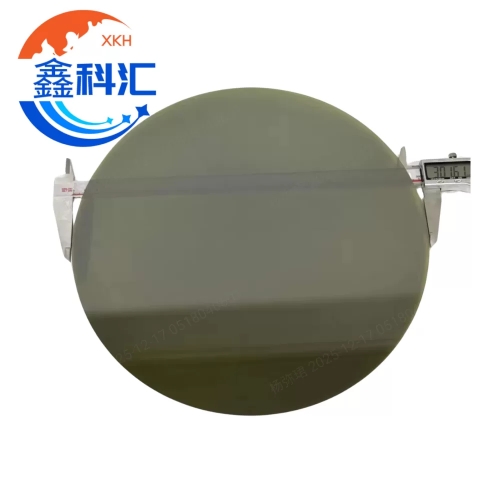
The Substrate: The Material Basis of Performance
The substrate is the starting point of every SiC-based power device. Unlike conventional silicon, SiC possesses a wide bandgap of approximately 3.26 eV, high thermal conductivity, and a high critical electric field. These intrinsic properties allow SiC devices to operate at higher voltages, elevated temperatures, and faster switching speeds. The quality of the substrate, including crystalline uniformity and defect density, directly affects device efficiency, reliability, and long-term stability. Substrate defects can lead to localized heating, reduced breakdown voltage, and lower overall system performance, emphasizing the importance of material precision.
Advances in substrate technology, such as larger wafer sizes and reduced defect densities, have lowered manufacturing costs and expanded the range of applications. Transitioning from 6-inch to 12-inch wafers, for example, significantly increases usable chip area per wafer, enabling higher production volumes and lowering per-chip costs. This progress not only makes SiC devices more accessible for high-end applications like electric vehicles and industrial inverters but also accelerates their adoption in emerging sectors such as data centers and fast-charging infrastructure.
Device Architecture: Leveraging the Substrate Advantage
The performance of a power module is closely tied to the device architecture built on the substrate. Advanced structures such as trench-gate MOSFETs, superjunction devices, and double-sided cooled modules utilize the superior electrical and thermal properties of SiC substrates to reduce conduction and switching losses, increase current-carrying capacity, and support high-frequency operation.
Trench-gate SiC MOSFETs, for instance, reduce conduction resistance and improve cell density, leading to higher efficiency in high-power applications. Superjunction devices, combined with high-quality substrates, enable high-voltage operation while maintaining low losses. Double-sided cooling techniques enhance thermal management, allowing smaller, lighter, and more reliable modules that can operate in harsh environments without additional cooling mechanisms.
System-Level Impact: From Material to Converter
The influence of SiC substrates extends beyond individual devices to entire power systems. In electric vehicle inverters, high-quality SiC substrates enable 800V-class operation, supporting rapid charging and extending driving range. In renewable energy systems such as photovoltaic inverters and energy storage converters, SiC devices built on advanced substrates achieve conversion efficiencies above 99%, reducing energy losses and minimizing system size and weight.
High-frequency operation facilitated by SiC reduces the size of passive components, including inductors and capacitors. Smaller passive components allow more compact and thermally efficient system designs. In industrial settings, this translates into reduced energy consumption, smaller enclosure sizes, and improved system reliability. For residential applications, the improved efficiency of SiC-based inverters and converters contributes to cost savings and lower environmental impact over time.
The Innovation Flywheel: Material, Device, and System Integration
The development of SiC power electronics follows a self-reinforcing cycle. Improvements in substrate quality and wafer size reduce production costs, which promotes broader adoption of SiC devices. Increased adoption drives higher production volumes, further lowering costs and providing resources for continued research in material and device innovations.
Recent progress demonstrates this flywheel effect. The transition from 6-inch to 8-inch and 12-inch wafers increases usable chip area and output per wafer. Larger wafers, combined with advances in device architecture such as trench-gate designs and double-sided cooling, allow for higher performance modules at lower costs. This cycle accelerates as high-volume applications like electric vehicles, industrial drives, and renewable energy systems create continuous demand for more efficient and reliable SiC devices.
Reliability and Long-Term Advantages
SiC substrates not only improve efficiency but also enhance reliability and robustness. Their high thermal conductivity and high breakdown voltage allow devices to tolerate extreme operating conditions, including rapid temperature cycling and high-voltage transients. Modules built on high-quality SiC substrates exhibit longer lifetimes, reduced failure rates, and better performance stability over time.
Emerging applications, such as high-voltage DC transmission, electric trains, and high-frequency data center power systems, benefit from SiC’s superior thermal and electrical properties. These applications require devices that can operate continuously under high stress while maintaining high efficiency and minimal energy loss, highlighting the critical role of the substrate in system-level performance.
Future Directions: Toward Intelligent and Integrated Power Modules
The next generation of SiC technology focuses on intelligent integration and system-level optimization. Smart power modules integrate sensors, protection circuits, and drivers directly into the module, enabling real-time monitoring and enhanced reliability. Hybrid approaches, such as combining SiC with gallium nitride (GaN) devices, open new possibilities for ultra-high-frequency, high-efficiency systems.
Research is also exploring advanced SiC substrate engineering, including surface treatment, defect management, and quantum-scale materials design, to further improve performance. These innovations may expand SiC applications into areas previously limited by thermal and electrical constraints, creating entirely new markets for high-efficiency power systems.
Conclusion
From the crystalline lattice of the substrate to the fully integrated power converter, silicon carbide exemplifies how material choice drives system performance. High-quality SiC substrates enable advanced device architectures, support high-voltage and high-frequency operation, and deliver efficiency, reliability, and compactness at the system level. As global energy demands grow and power electronics become more central to transportation, renewable energy, and industrial automation, SiC substrates will continue to serve as a foundational technology. Understanding the journey from substrate to converter reveals how a seemingly small material innovation can reshape the entire landscape of power electronics.
Post time: Dec-18-2025