
Silicon has long been the cornerstone of semiconductor technology. However, as transistor densities increase and modern processors and power modules generate ever-higher power densities, silicon-based materials face fundamental limitations in thermal management and mechanical stability.
Silicon carbide (SiC), a wide-bandgap semiconductor, offers significantly higher thermal conductivity and mechanical stiffness, while maintaining stability under high-temperature operation. This article explores how the transition from silicon to SiC is reshaping chip packaging, driving new design philosophies and system-level performance improvements.
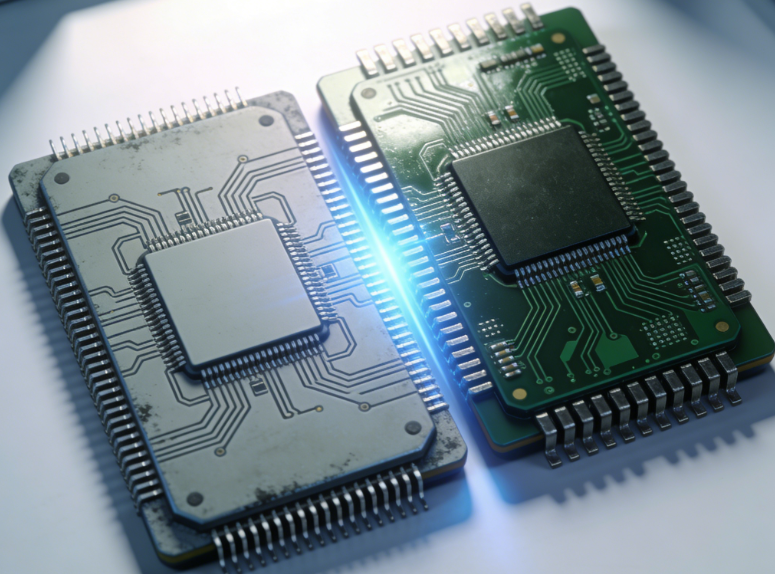
1. Thermal Conductivity: Addressing the Heat Dissipation Bottleneck
One of the central challenges in chip packaging is rapid heat removal. High-performance processors and power devices can generate hundreds to thousands of watts in a compact area. Without efficient heat dissipation, several issues arise:
-
Elevated junction temperatures that reduce device lifespan
-
Drift in electrical characteristics, compromising performance stability
-
Mechanical stress accumulation, leading to package cracking or failure
Silicon has a thermal conductivity of approximately 150 W/m·K, whereas SiC can reach 370–490 W/m·K, depending on crystal orientation and material quality. This significant difference enables SiC-based packaging to:
-
Conduct heat more rapidly and uniformly
-
Lower peak junction temperatures
-
Reduce reliance on bulky external cooling solutions
2. Mechanical Stability: The Hidden Key to Package Reliability
Beyond thermal considerations, chip packages must withstand thermal cycling, mechanical stress, and structural loads. SiC offers several advantages over silicon:
-
Higher Young’s modulus: SiC is 2–3 times stiffer than silicon, resisting bending and warpage
-
Lower coefficient of thermal expansion (CTE): Better matching with packaging materials reduces thermal stress
-
Superior chemical and thermal stability: Maintains integrity under humid, high-temperature, or corrosive environments
These properties directly contribute to higher long-term reliability and yield, particularly in high-power or high-density packaging applications.
3. A Shift in Packaging Design Philosophy
Traditional silicon-based packaging relies heavily on external heat management, such as heatsinks, cold plates, or active cooling, forming a “passive thermal management” model. The adoption of SiC fundamentally changes this approach:
-
Embedded thermal management: The package itself becomes a high-efficiency thermal pathway
-
Support for higher power densities: Chips can be placed closer together or stacked without exceeding thermal limits
-
Greater system integration flexibility: Multi-chip and heterogeneous integration become feasible without compromising thermal performance
In essence, SiC is not merely a “better material”—it enables engineers to rethink chip layout, interconnects, and package architecture.
4. Implications for Heterogeneous Integration
Modern semiconductor systems increasingly integrate logic, power, RF, and even photonic devices within a single package. Each component has distinct thermal and mechanical requirements. SiC-based substrates and interposers provide a unifying platform that supports this diversity:
-
High thermal conductivity enables uniform heat distribution across multiple devices
-
Mechanical rigidity ensures package integrity under complex stacking and high-density layouts
-
Compatibility with wide-bandgap devices makes SiC particularly suitable for next-generation power and high-performance computing applications
5. Manufacturing Considerations
While SiC offers superior material properties, its hardness and chemical stability introduce unique manufacturing challenges:
-
Wafer thinning and surface preparation: Requires precision grinding and polishing to avoid cracks and warpage
-
Via formation and patterning: High-aspect-ratio vias often require laser-assisted or advanced dry etching techniques
-
Metallization and interconnects: Reliable adhesion and low-resistance electrical pathways demand specialized barrier layers
-
Inspection and yield control: High material stiffness and large wafer sizes magnify the impact of even minor defects
Successfully addressing these challenges is critical to realizing the full benefits of SiC in high-performance packaging.
Conclusion
The transition from silicon to silicon carbide represents more than a material upgrade—it reshapes the entire chip packaging paradigm. By integrating superior thermal and mechanical properties directly into the substrate or interposer, SiC enables higher power densities, improved reliability, and greater flexibility in system-level design.
As semiconductor devices continue to push the limits of performance, SiC-based materials are not just optional enhancements—they are key enablers of next-generation packaging technologies.
Post time: Jan-09-2026